
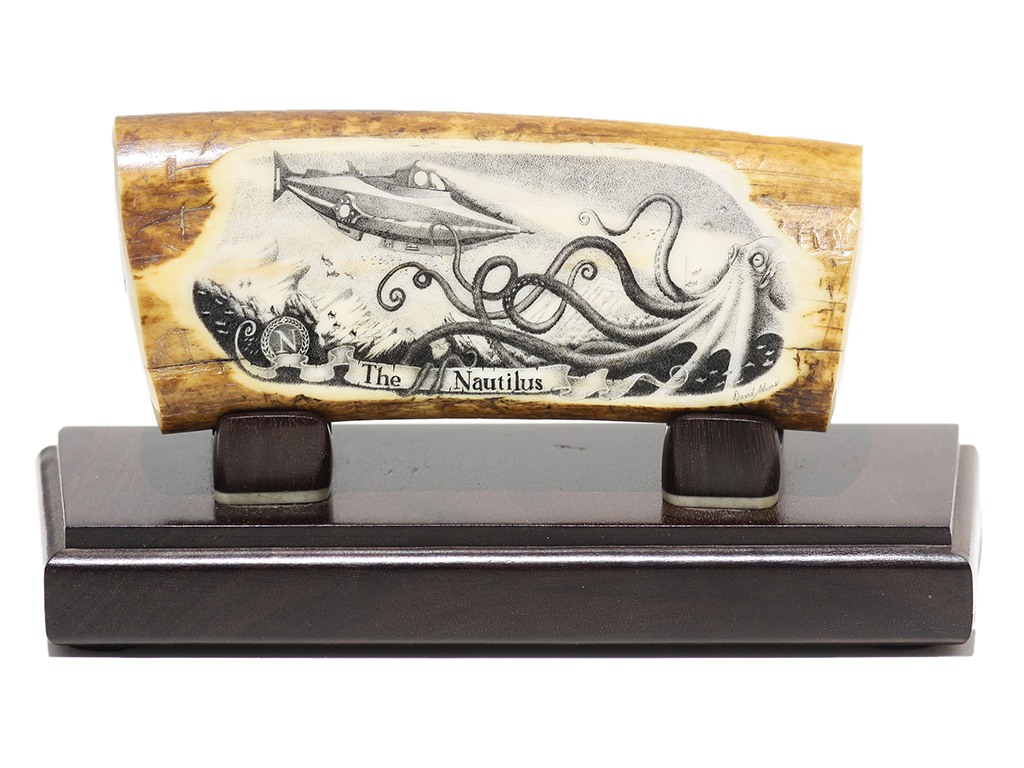
“Captain Nemo’s Nautilus” black and white scrimshaw on ancient walrus tusk ivory by David Smith. Nemo has his searchlight on in the deep, deep sea. Love the deatil of the Nautilus crest in the lower right hand corner. Very heavy, solid piece of ivory, by the way. This giant octopus might not approve of this intruder into his realm. Story to be continued by the new owner. Mounted on a beautiful piece of cocobolo, this one is a keeper!!
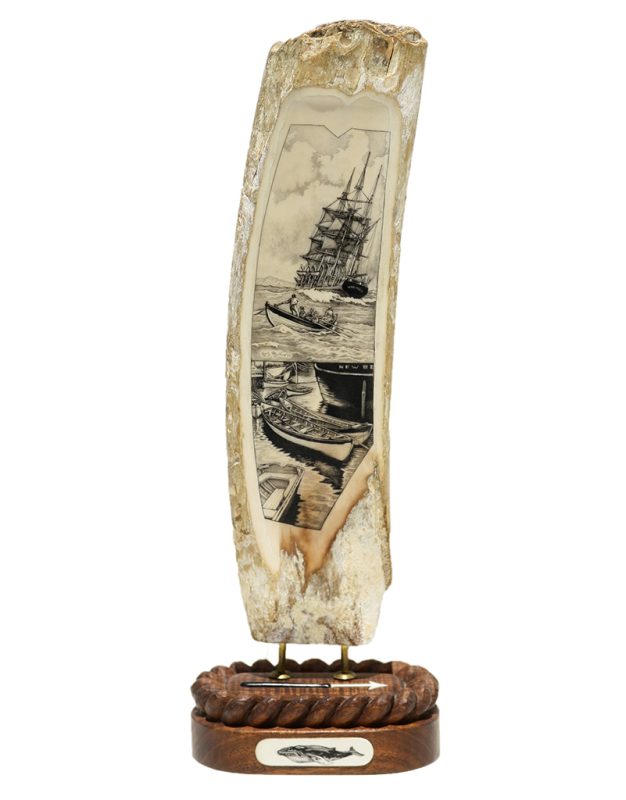
“Wanderer at Sea” black and white scrimshaw on huge ancient walrus tusk ivory artifact by the late Kelly Mulford. Monster piece of ancient walrus tusk ivory that probably weighs well over two pounds! Cannot get the actual weight as the stand is firmly attached. Speaking of the stand, this is a masterpiece by the late Ken Fredericks. The coiled rope is not attached, but part of the entire piece of wood. Beautiful in inlay with the Mulford whale and the base has a marvelous inlay of a harpoon. This is truly a one of a kind creation. Mulford was one of the most versatile of the Bellingham scrimshanders. He could do first rate wildlife, portraits and nautical in black and white or color. Look closely at the stern of the whaler and see the name, Wanderer, etched on the stern. Amazing detail. Mulford created this in 1999. If it were done today in would be thousands more. From one of our clients who is no longer with us. Probably the best bargain for work of this caliber in the whole Gallery. Don’t pass this one up, it is that good.
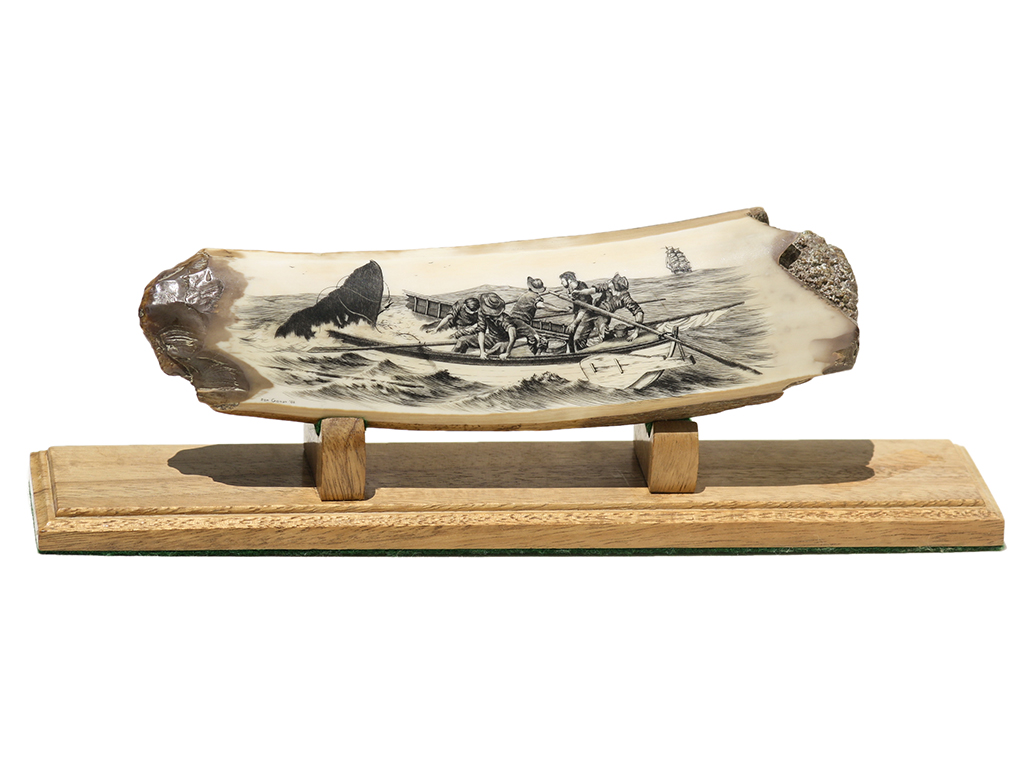
“A Dead Whale or a Stove Boat” black and white scrimshaw on ancient walrus tusk ivory artifact by Dan Cronan. Ivory used as an ice axe or digging tool by people in the Northern Bering Sea area 500 to 1000 years ago. This is from the collection of one of our clients who is no longer with us. Not much ivory of this caliber around today. Note that it was created in 2002. Scrimshander is known for excellent black and white nautical scenes. Quote is from Moby Dick. Rare opportunity to obtain a first rate Cronan scrimshaw for 2002 prices.
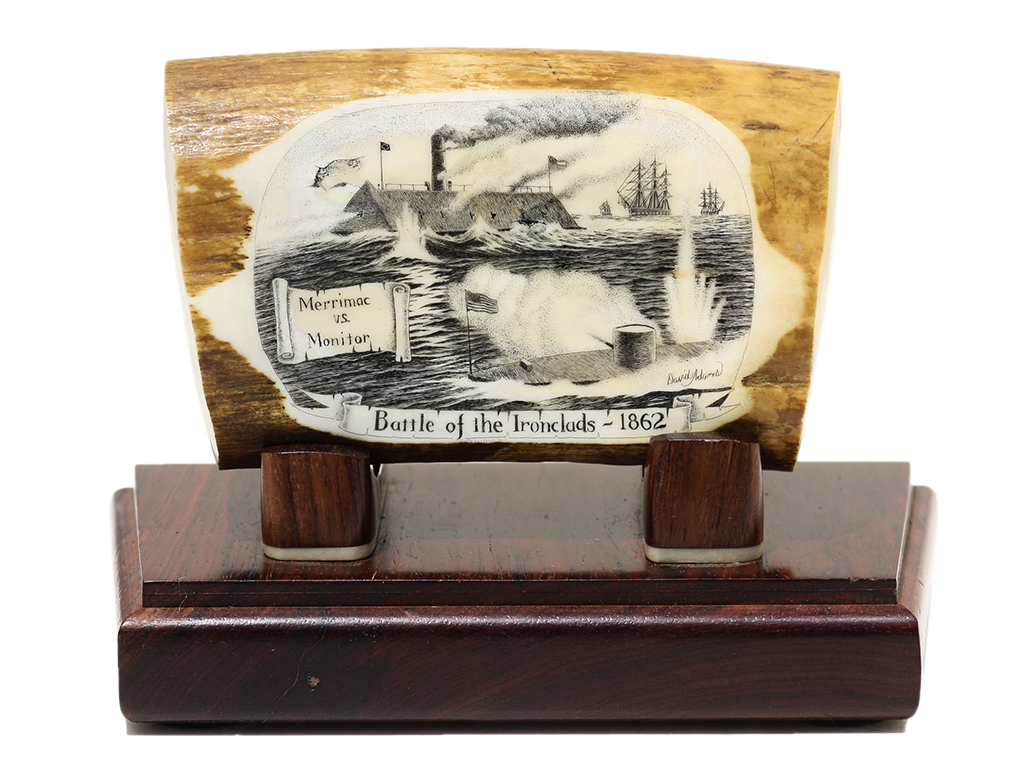
“Battle of the Ironclads – 1862” black and white scrimshaw on ancient walrus tusk ivory by David Adams. Famous Civil War battle scene that Adams brings alive. Very thick and heavy piece of ancient walrus tusk ivory mounted on one of the best pieces of cocobolo that we have seen. Information from the internet:

The clash between the USS Monitor and the CSS Virginia (built from the remains of the USS Merrimack) at the Battle of Hampton Roads (March 9, 1862) is historically significant because it was the first-ever combat between ironclad warships. This event instantly rendered the world’s wooden navies obsolete and marked the dawn of modern armored, steam-powered naval warfare.

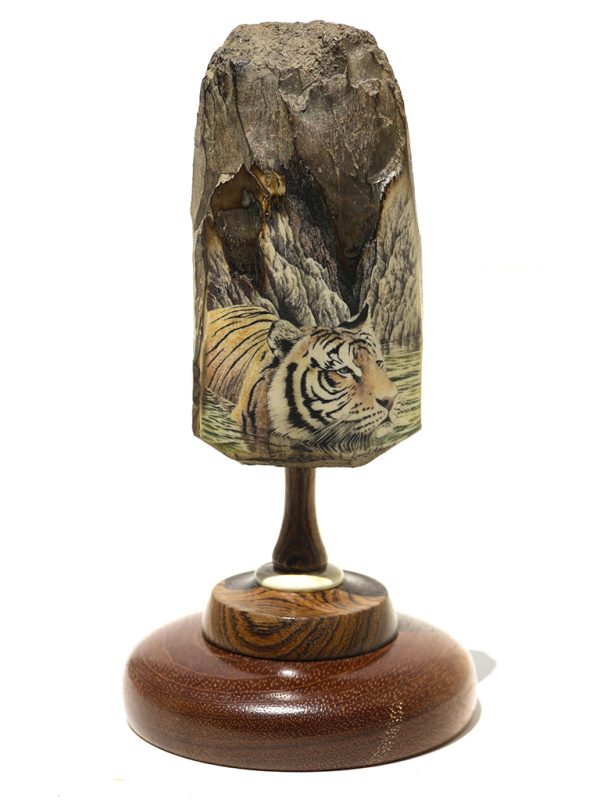
“Bengal Cooling” color scrimshaw on ancient walrus tusk ivory artifact by David Adams. Bengals love water and this one seems to be having a great time. Note the reflection in the water, whiskers and coat. Incredible work by Adams here. The ivory was used as an ice axe hundreds of years ago in the Northern Bering sea area. It is quite heavy; the back side shows how it was worked. There was just a hint of workable surface on the front side and see what Adams had created. The dark chasms in the background had no workable surface, but Adams created the side of the mountain with the stream running down the crevice. Brilliant touch. This illustrates how he studies the complete piece before beginning his work. Elegant stand completes the picture. A keeper if there ever was one!
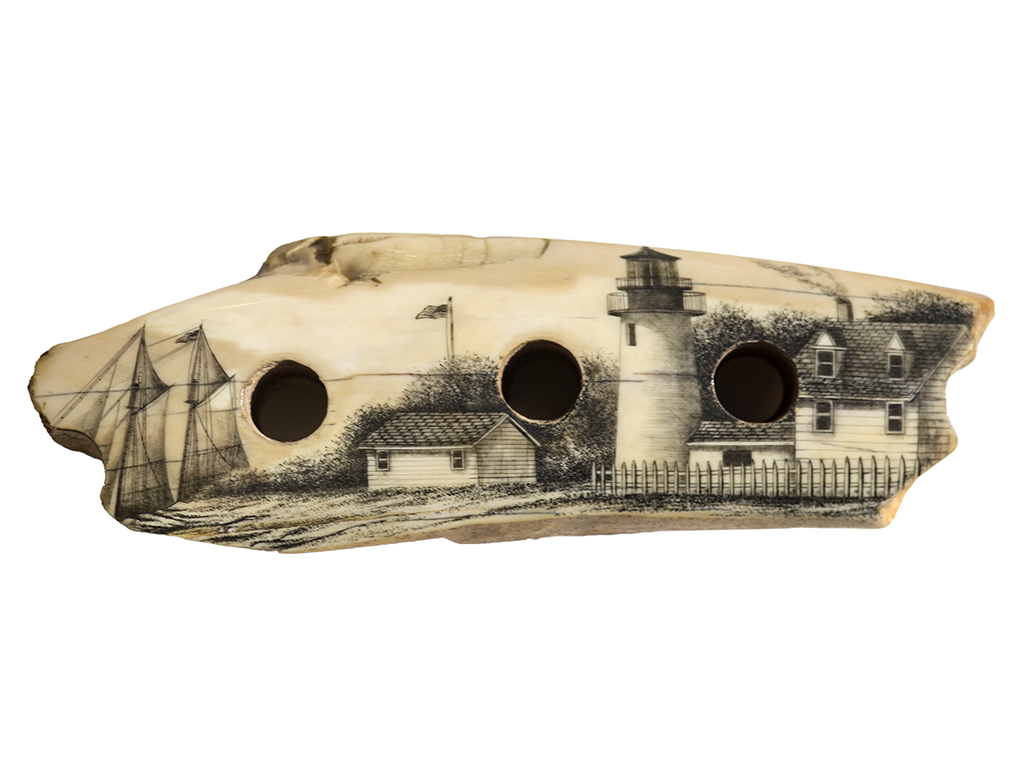
“Lighthouse Compound” black and white scrimshaw on ancient walrus tusk ivory artifact by the late Salman Rashidi. Fine use of artifact used as a sled runner by natives in the Northern Bering Sea area hundreds of years ago. Fine detail by Rashidi of the lighthouse itself with the addition of a passing schooner on the right side. From the collection of one of our clients who is no longer with us. Stand was lost along the way. Not many Rashidi pieces around these days.
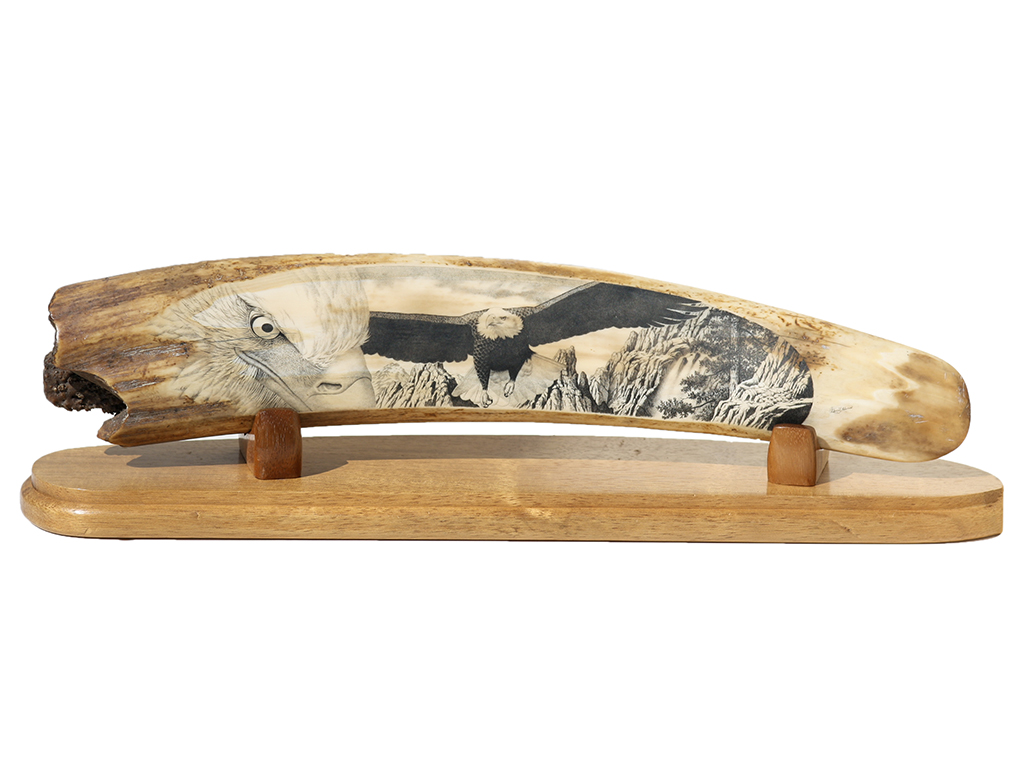
“King of the Mountains” black and white scrimshaw on ancient walrus tusk ivory artifact by David Adams. First rate composition by talented scrimshander, Adams. One’s attention is drawn to the center with the soaring eagle, then to the right picking up the almost hidden waterfall. Finally, one sees the enormous eagle’s head with the piercing eye. The eagle’s sight is astounding as they can see an rabbit from two to three miles away! This ancient walrus tusk was used as an ice axe by natives in the Northern Bering Sea area hundreds of years ago. Museum quality condition and it weighs 2 lbs., 5 oz.! Very few of these around today. From one of our clients who is no longer with us. Everything works on this one.
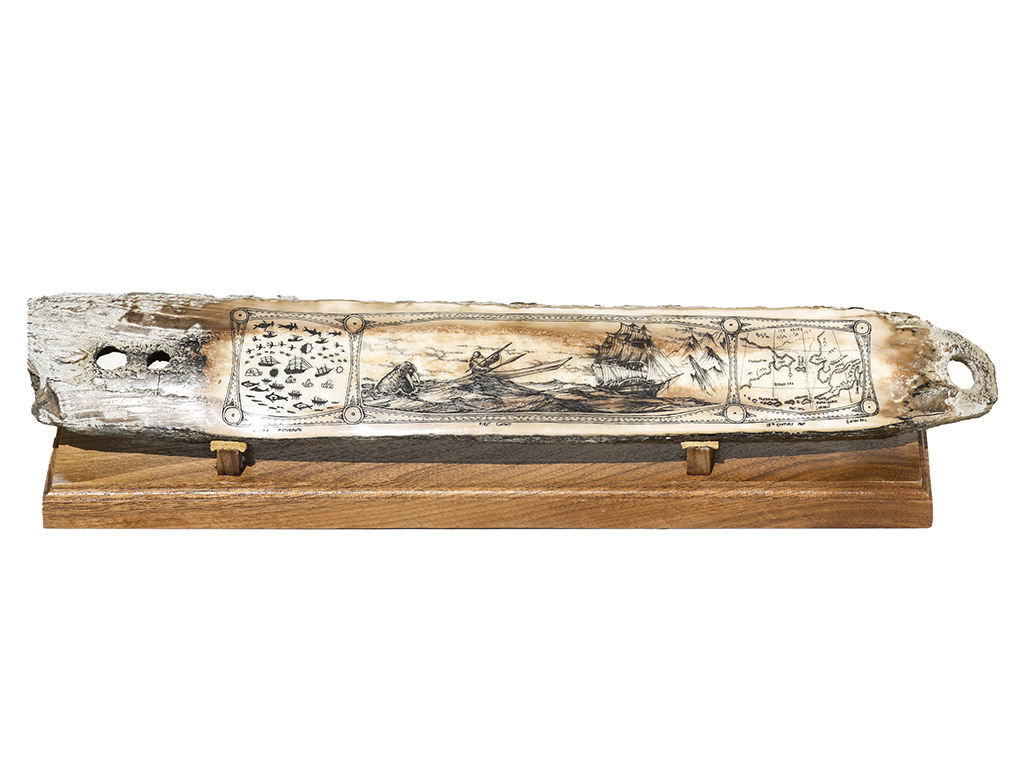
“First Contact” black and white scrimshaw on ancient walrus tusk artifact by Gregg Olson. Amazing artifact used as a sled runner on the sleds of people in the Northern Bering Sea hundreds and hundreds of years ago. At some point it appears to have been subjected to fire. As can be seen, the underside is completely black and charred. It is unbelievable that enough ivory remained on the other side to enable Olson to create this unique scene. The scrimshander has chosen to divide the surface into three separate panels: (Eskimo Pictograph, First Contact and 18th Century Map) all of which tell a story. This is from the collection of one of our clients who is no longer with us. His estate requested us to price it to move, which we have done. This could easily be priced at $2800.00. Good deal here for someone.
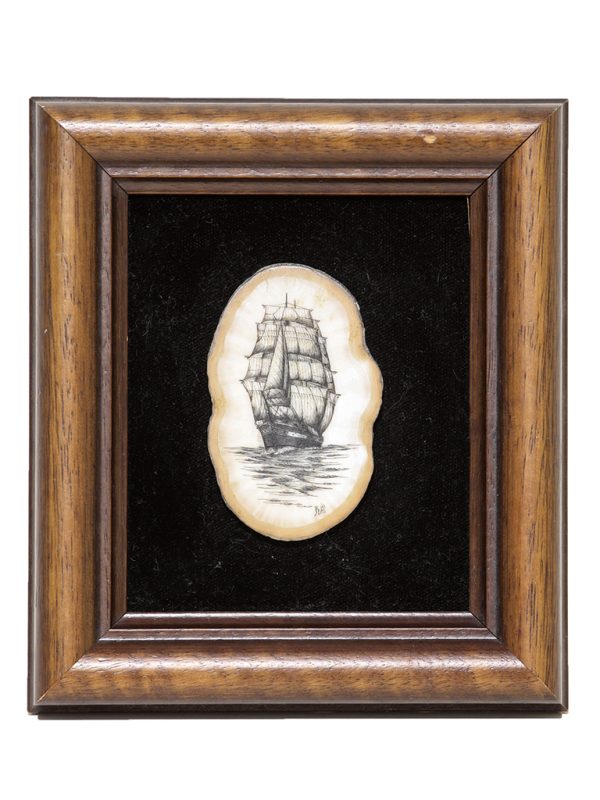
“China Tea Clipper” black and white scrimshaw on large cross cut piece of ancient walrus tusk ivory. Framed work would look nice hanging on a wall or set in an easel on a collector’s desk. Created by Williams 1988 when he was working in Maui. Later he moved to the Bay Area and did many, many pieces for Scrimshaw Gallery. This is from one of our collectors who is no longer with us (ditto Williams) who probably got it in Maui. By the way, this is cross cut came from a very large ancient walrus tusk. Not many that size around today. Excellent opportunity to add a vintage Williams work to one’s collection at 1988 prices.
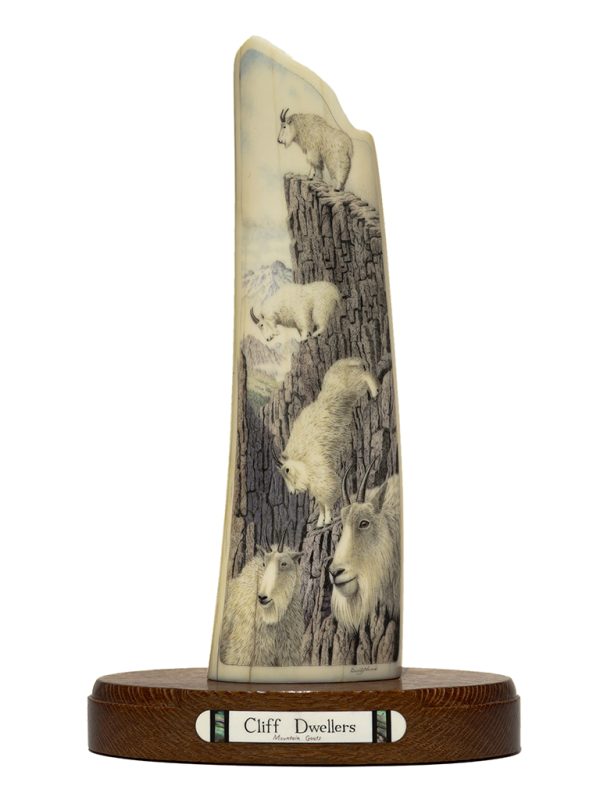
“Cliff Dwellers” mainly black and white scrimshaw on ancient walrus tusk ivory by David Adams. Amazing composition by Adams on this one. Perfect subject matter for the size and shape of the ivory.The way the tip of the tusk was broken off years and years ago gives the impression of a mountain top. Mounted on a stunning R. Cash lacewood stand, this would be a welcome addition to any serious scrimshaw collection.
Taken from the internet:
The mountain goat, also known as the Rocky Mountain goat, is a cloven-footed mammal that is endemic to the remote and rugged mountainous areas of western North America. A subalpine to truly alpine species, it is a sure-footed climber commonly seen on sheer rock faces, near-vertical cliffs and icy passages.