
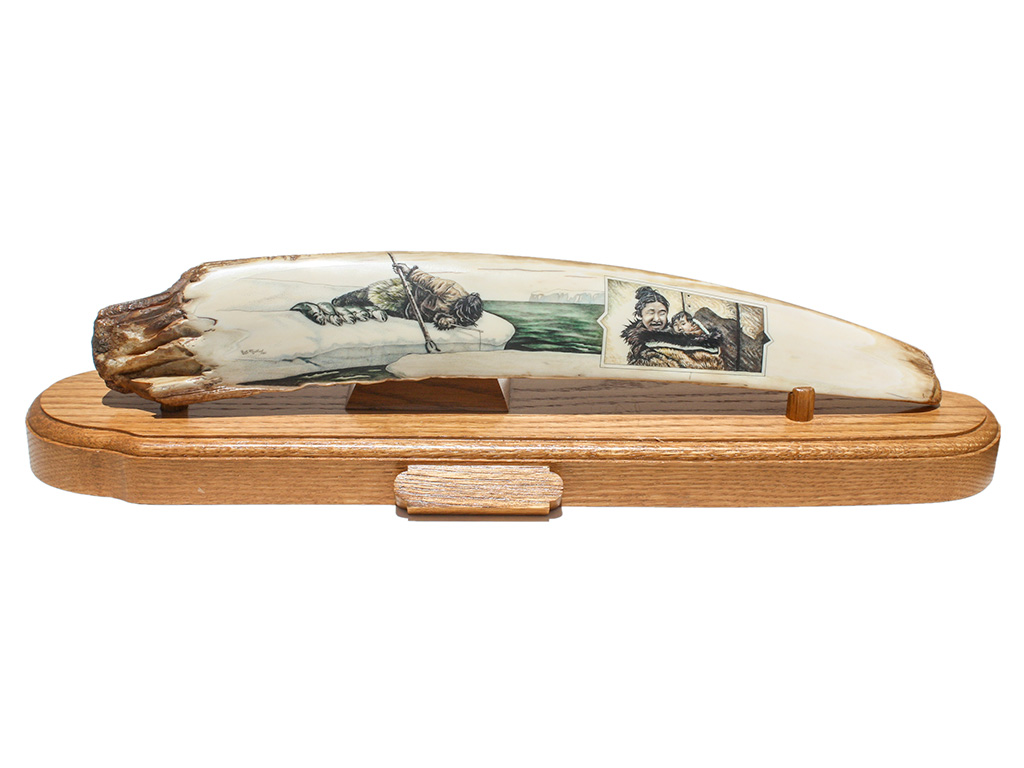
“Native Fisherman on Ice” color scrimshaw on ancient walrus tusk ivory by the late Kelly Mulford. Patient fisherman jiggles a lure attracting fish. He then spears them with his handmade trident, probably made from walrus tusk. Looks like a productive day. Second panel depicts a Native woman preparing to venture outside. Everyone appears to be quite warm at the present time. This was created by Mulford in 1982. Long time ago in the contemporary scrimshaw world. It is from one of our clients who is no longer with us. Nice Mulford at early 1980s price.
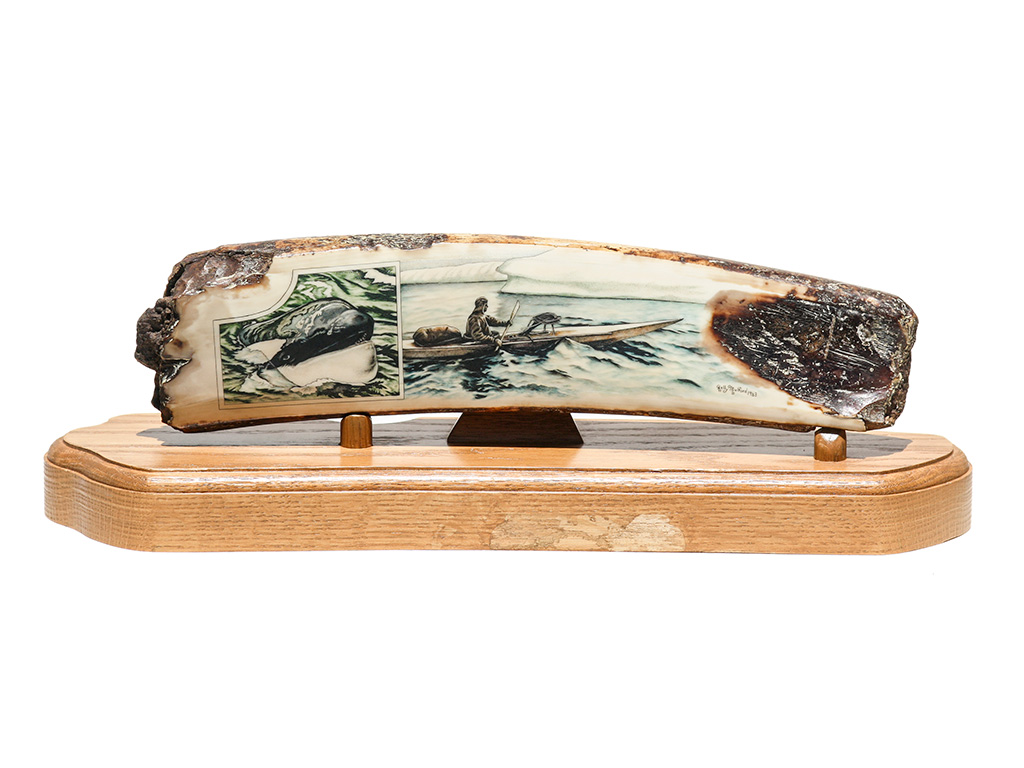
“Searching Native Hunter” color scrimshaw on ancient walrus tusk ivory artifact by the late Kelly Mulford. Mulford was a master of the separate panel scrimshaw technique, each piece adding something to the whole of the artwork. We see the intrepid hunter in a spring ice laden area searcching for a walrus or seal. Love the detail of the coiled rope on the deck attached to a long lance. The orca has just surfaced and Kelly did a masterful job of the cold water cascading from his head. Spectacular work. Very heavy ice axe (2 pounds, 6.2 ounces!). This is from a long time client who is no longer with us. Estate asked us to price to move. It was created in 1983 and should be valued at least 25% higher.Great chance to add a vintage Mulford to your collection at 1980s prices.
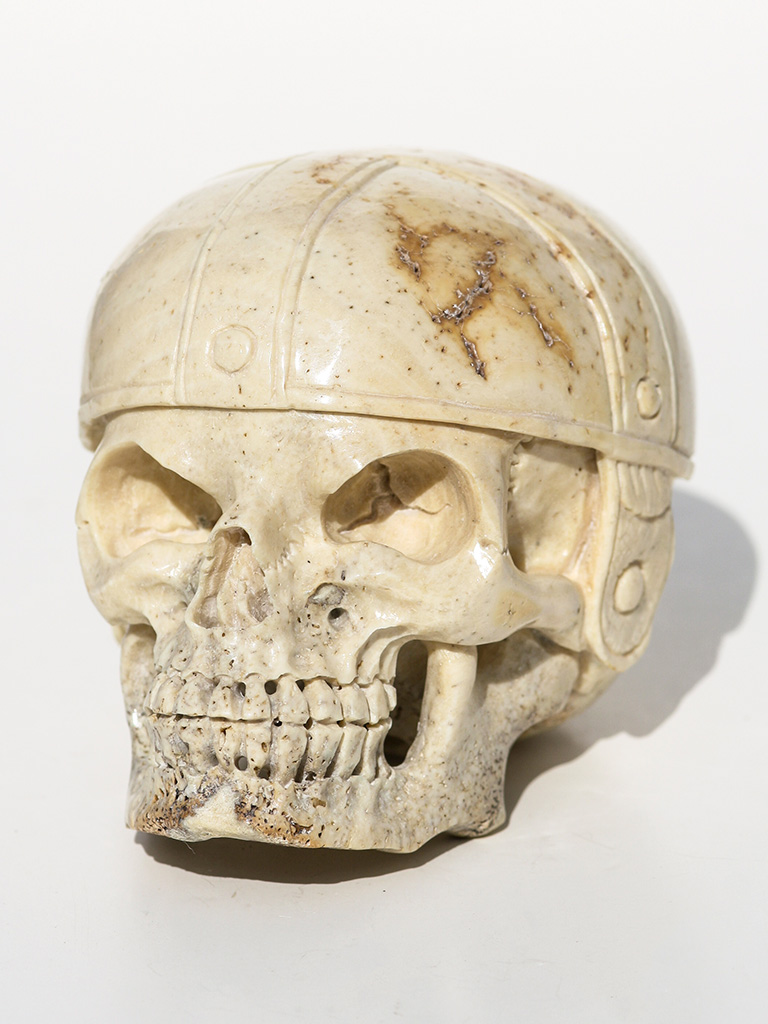
“Skull with Football Helmet” carved on large, heavy piece of ancient walrus jawbone hundreds of years old by unknown artist. Really like this playful piece with the old style leather helmet. This guy must have been really tough. This is a very heavy piece of ancient walrus jawbone weighing 1 pound, 2 oz. Rare solid piece. Not much of this caliber around anymore.
Notice:
This is ancient walrus tusk jawbone found in the Northern Bering Sea area. The material is 500-1500 years old and is occasionally found in ancient Eskimo camp and hunting sites. The marvelous colors are the result of minerals that have been absorbed into the jawbone over hundreds and hundreds of years. Obviously this material cannot be replenished, making it quite collectible and valuable.
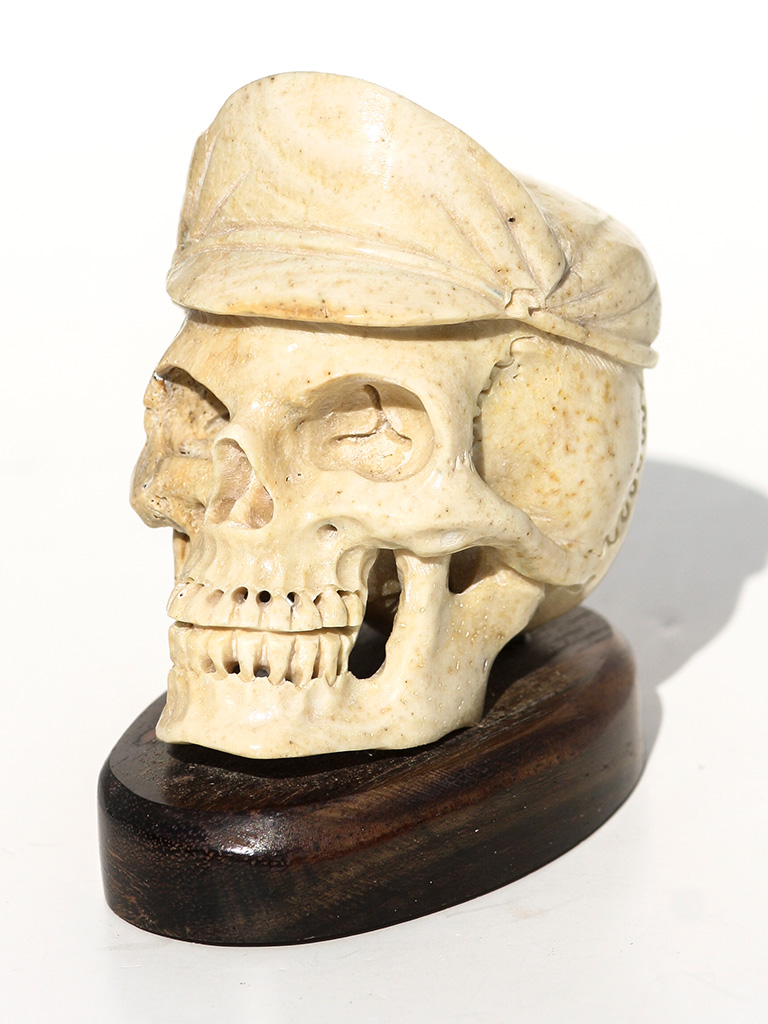
“Skull with Motorcycle Cap” carved from ancient walrus jawbone hundreds of years old by talented unknown artist. Love the cap. Reminds one of Brando in “The Wild Ones”. Brings a smile to one’s face. Great addition to any collection.
Notice:
This is ancient walrus tusk jawbone found in the Northern Bering Sea area. The material is 500-1500 years old and is occasionally found in ancient Eskimo camp and hunting sites. The marvelous colors are the result of minerals that have been absorbed into the jawbone over hundreds and hundreds of years. Obviously this material cannot be replenished, making it quite collectible and valuable.
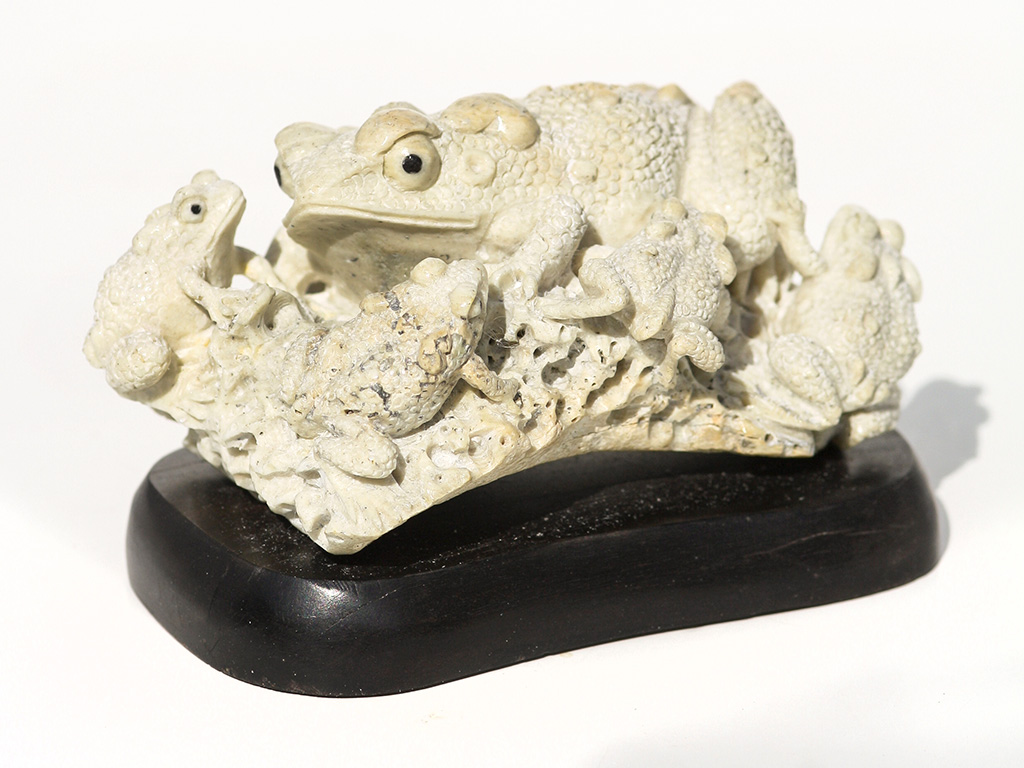
“Five Frogs Two Tadpoles” intricate carving on ancient walrus jawbone created by talented unknown carver. Whole family of frogs, plus tadpoles depicted here. Excellent detail on large piece of walrus jawbone. Excellent addition to any collection.
Notice:
This is ancient walrus tusk jawbone found in the Northern Bering Sea area. The material is 500-1500 years old and is occasionally found in ancient Eskimo camp and hunting sites. The marvelous colors are the result of minerals that have been absorbed into the jawbone over hundreds and hundreds of years. Obviously this material cannot be replenished, making it quite collectible and valuable.
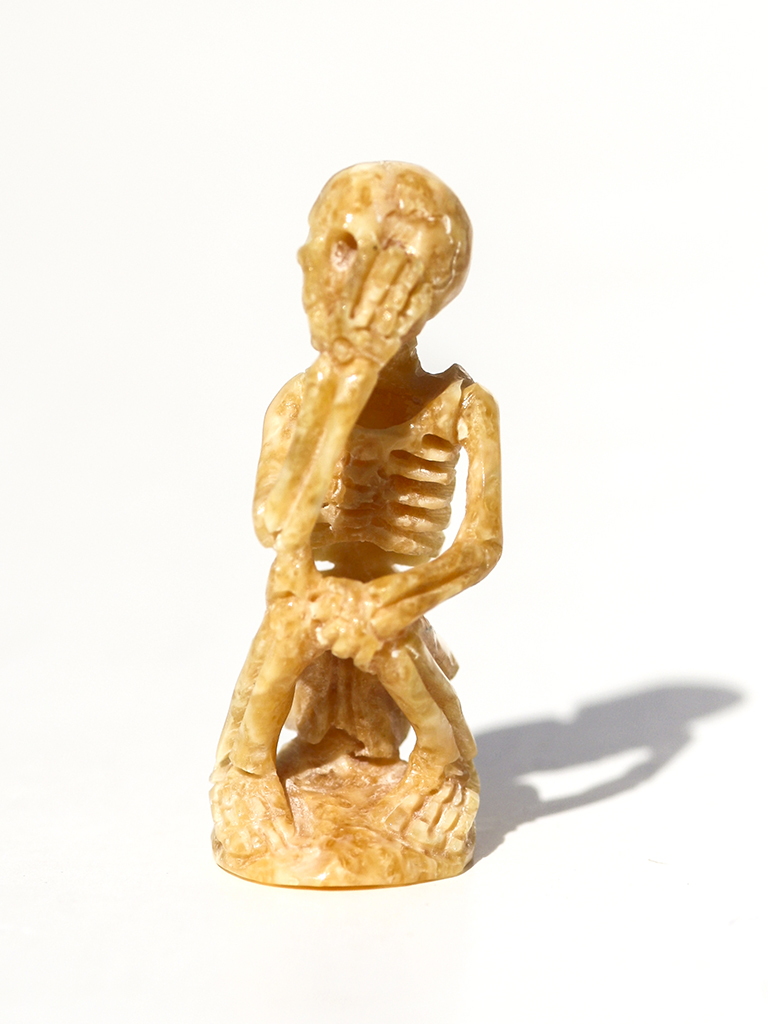
Yoga Pose Skeleton Carving created by unknown carver on ancient walrus tusk ivory. Whimsical carving brings a smile to everyone’s face. Excellent color in this the result of minerals that have been absorbed into the ivory over hundreds of years as it was buried in the Northern Bering Sea area.
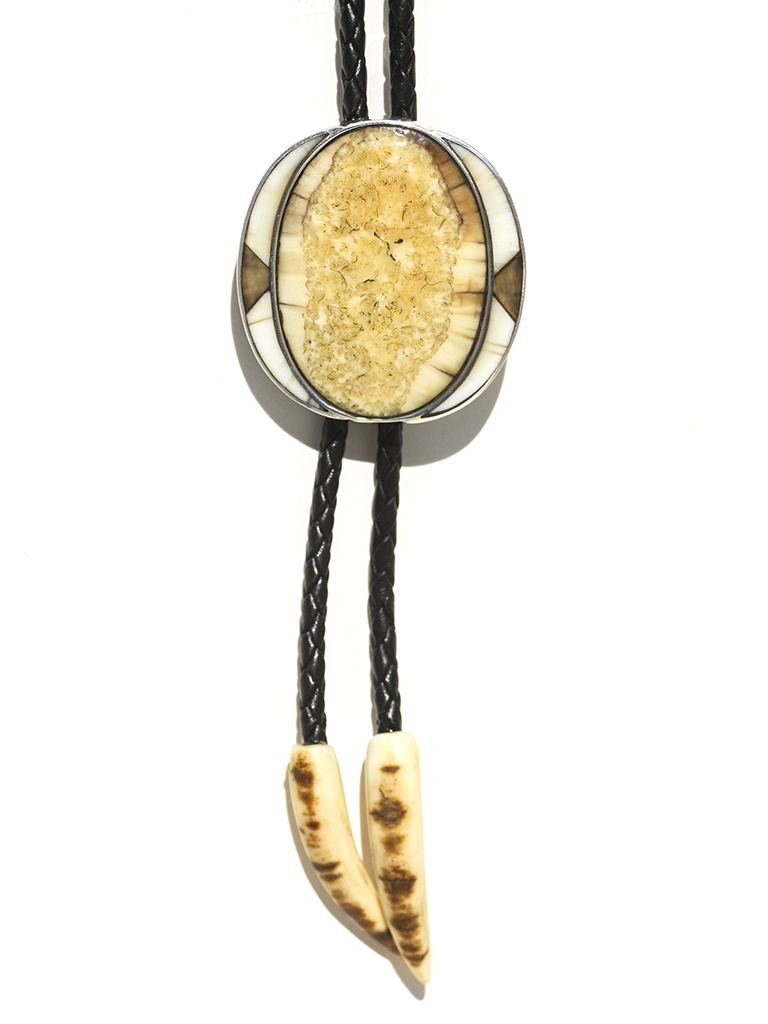
Fossil Ivory Bolo and Buckle Set one of a kind matching set of ancient walrus tusk iory and mammoth ivory in sterling silver. Bolo features a 22″ long braided leather with hand carved mammoth ivory tips. Oval buckle set in sterling silver features ancient walrus tusk ivory and mammoth ivory inlay. Buckle designed for a belt up to 1 1/4″ wide. Incredible craftsmanship.
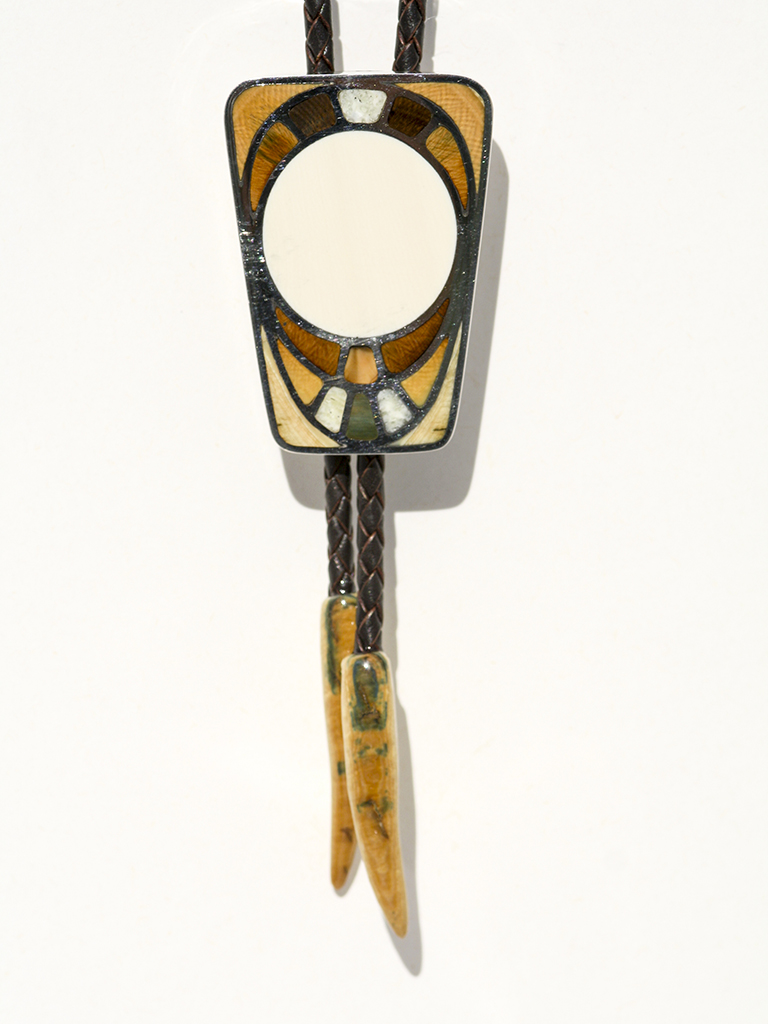
Handmade bolo with ancient walrus tusk ivory and ancient mammoth ivory set in sterling silver. One of a kind bolo features handmade mammoth ivory tips. Braided leather measures 22″ long (including tips). The mammoth ivory cab is perfect for a custom scrimshaw or stunning just as it is. The inlay work on this is outstanding.
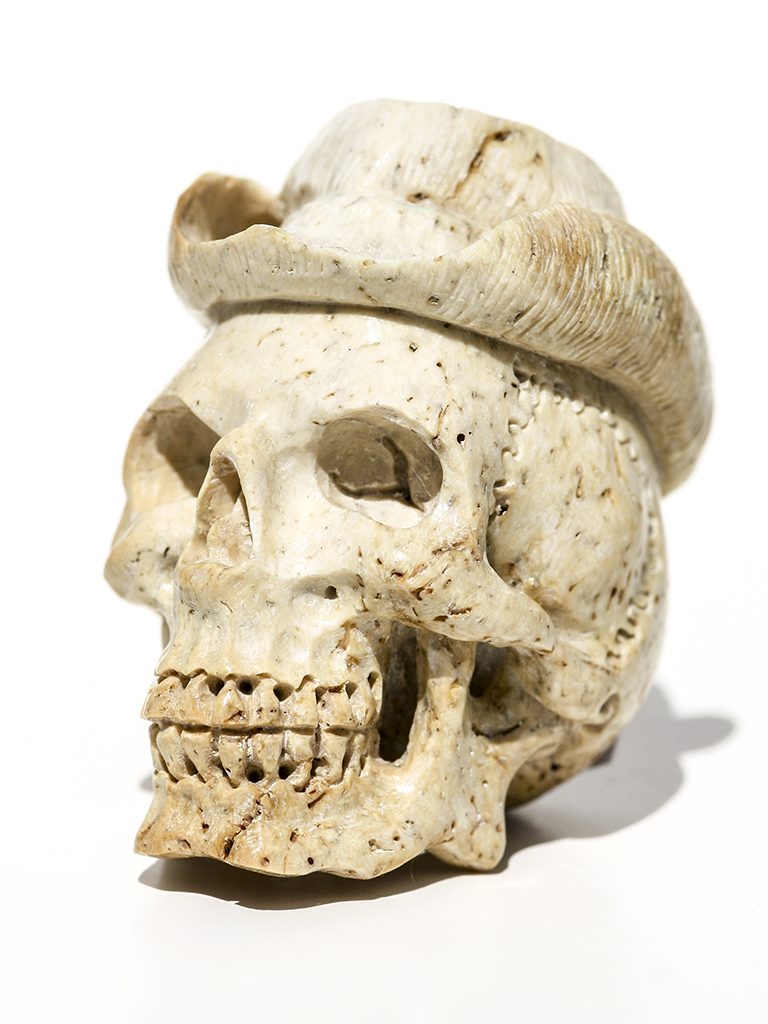
“Cowboy Hat Skull” detailed carving on ancient walrus jawbone by talented unknown carver. This really brings a smile to one’s face. Those cowboys never give up their hats. Ancient walrus jawbone approximately 500-1500 years old from the Northern Bering Sea area. Nice color in the jawbone.
Notice:
This is ancient walrus tusk jawbone found in the Northern Bering Sea area. The material is 500-1500 years old and is occasionally found in ancient Eskimo camp and hunting sites. The marvelous colors are the result of minerals that have been absorbed into the jawbone over hundreds and hundreds of years. Obviously this material cannot be replenished, making it quite collectible and valuable.
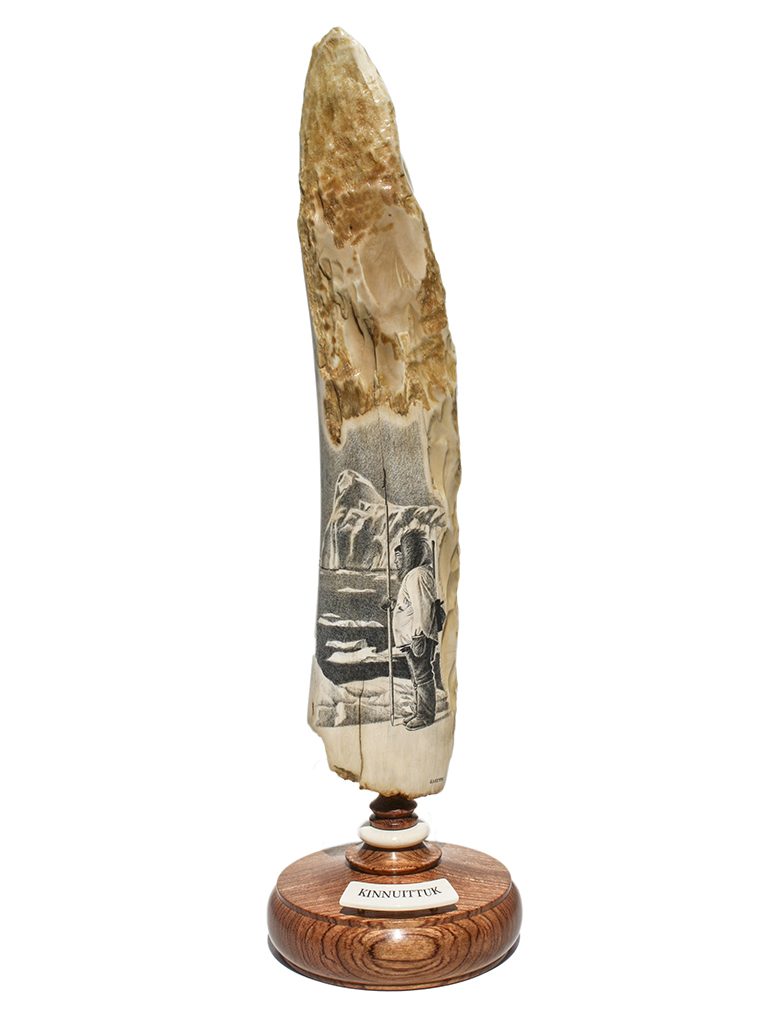
“He Is Patient” black and white scrimshaw on ancient walrus tusk ivory artifact by David Smith. The title plate on the stand is engraved “KINNUITTUK” which translates to the phrase “He is patient”. Naturally, one would be patient if one’s existence depended upon bringing back a walrus for food, clothing, tools, etc. Scrimshander Smith has captured the stark environment of the hunter’s world as he stands motionless for hours upon hours waiting for just the right moment. By putting his quarry on the opposite side of the tusk, one wonders if he will be successful on this day’s hunt. This is a very large artifact that was in the process of being worked into an ice axe when it was discarded hundreds and hundreds of years ago. The rough surface of the tusk give the impression of jagged ice floes. Smith has outdone himself with this masterpiece. If you want to acquire a signature Smith scrimshaw work, this is the one.